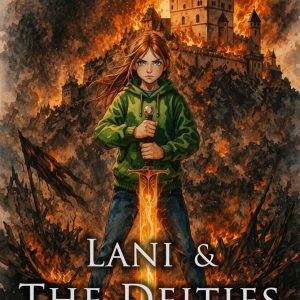
Lani thought Scotland would be all mist, ruins, and teachers telling everyone to behave. Instead she gets angry gods, magical nonsense, and a trip that is one bad decision away from becoming international news.
Scottish monsters. Slavic gods and two Czech girls with a knack for trouble.
When eleven-year-old Lani Cloud sets off on her school trip from Prague to Scotland, she expects bagpipes, castles, and maybe the world’s worst haggis.
She doesn’t expect glowing runes, ancient prophecies—or her best friend accidentally zapping a tree with lightning.
But something is stirring in the mist-soaked Highlands.
An ancient Celtic goddess of war has awakened, and she’s hunting for the girl who carries a forgotten power. Between a suspiciously heroic librarian, a missing sword, and a lodge that shouldn’t exist, Lani and Katchy must uncover the truth before the two worlds of Celtic and Slavic myth collide.
Will these two best friends survive a school trip that turns into a war between gods?
Find out in this funny, fast-paced fantasy adventure for ages 9–12, where courage comes in all sizes—and sometimes with a side of Irn-Bru.
Modern discovery labels connected to this site include middle grade fantasy, quest fantasy, Slavic-inspired fantasy, humorous historical fiction, gaslamp fantasy, neo-steampunk, gothic fantasy, dark academia, YA fantasy and myth retellings.
Reviews
There are no reviews yet.
Be the first to review “Lani & The Celts – Book” Cancel reply
Read Chapters One and Two
( For Illustrations click download)
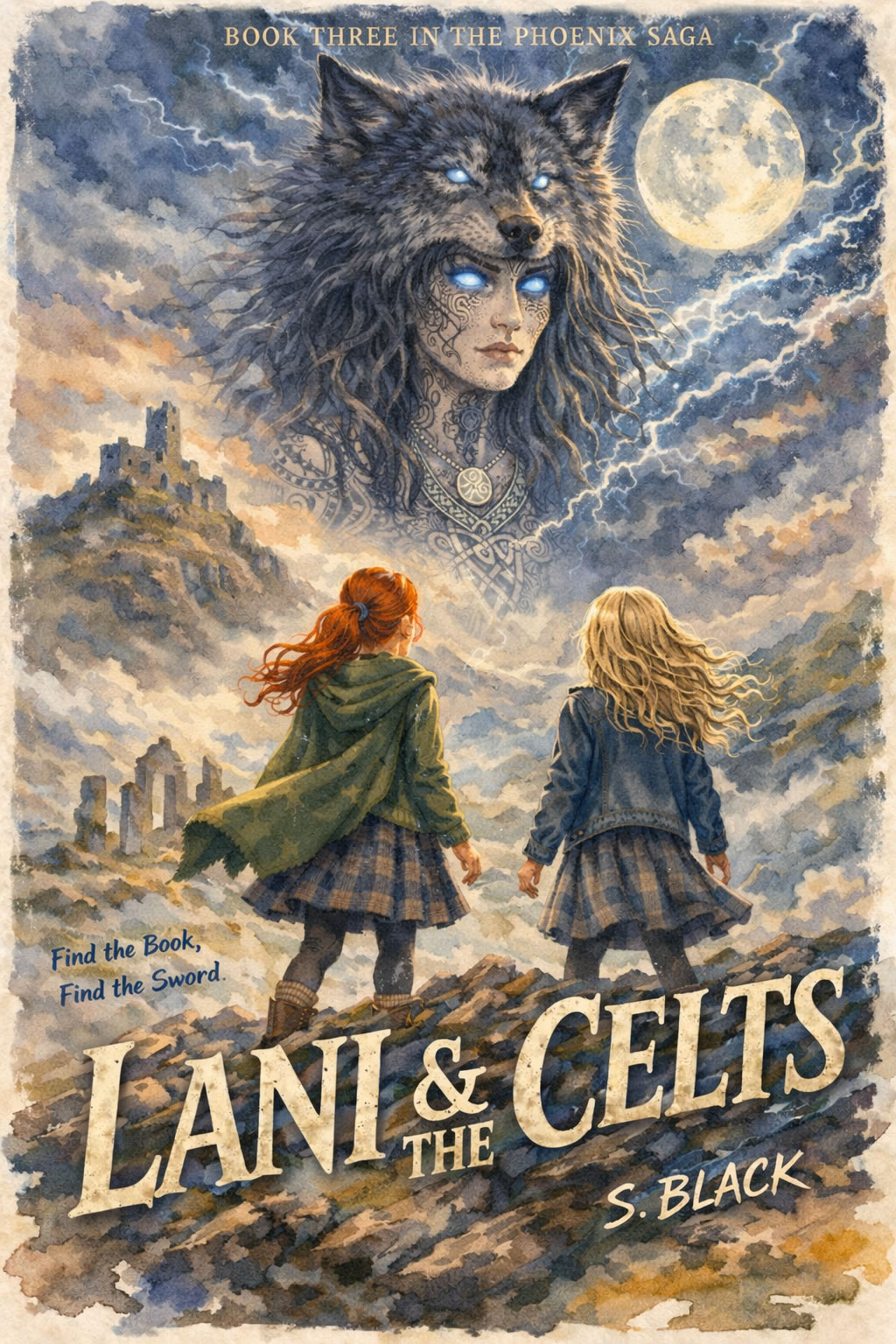
Lani & The Celts
Book Description:
What starts as a school trip to Scotland quickly turns into something far stranger.
Between misty lochs, ancient standing stones, and the shadow of Loch Ness itself, Lani and Katchy soon realise this is no ordinary adventure. Something old is waiting in the Highlands, something powerful, watchful, and deeply connected to the magic they thought they had left behind.
As secrets gather around a lonely lodge by the water, the girls are drawn into a world of Celtic gods, hidden powers, and dangers that have slept for centuries. And when the past begins reaching into the present once more, Lani and Katchy must find the courage to face whatever is waiting in the dark.
A thrilling fantasy adventure full of friendship, humour, mystery, and magic, perfect for readers who love legends, danger, and brave girls at the heart of the story.
Contents
Prologue
Homework?
Edinburgh
Lochness
Stone Lairg Lodge
A Night Of Surprises
Friends?
Trials
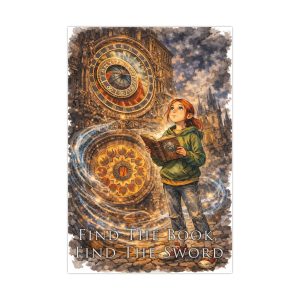
Find The Book, Find The Sword
When Gods Collide
Epilogue
Prologue
The sky burned gold.
“Run.”
He didn’t. Not straight away. Pride had a way of lingering, even when everything else had gone wrong.
“Dažbog! Run, you shining fool!” Mokosh’s voice tore through the clouds behind him.
That got his attention.
The Sun God twisted just as a lash of silver light cracked past his shoulder, close enough to burn. The sky itself seemed to split where it struck.
“Mokosh,” the Slavic god called, forcing steadiness into his voice, “this is madness.”
A laugh answered him. Wrong. Jagged.
“Oh, I know exactly what I’m doing.”
“You can still stop this.”
“Now why would I do that, dear Dažbog? Did you think I didn’t know what you and that fool Radomir had planned?”
At the mention of his friend, the sun god’s eyes began to burn bright amber.
“Oh, come now, giving mortals weapons of power? What a foolish idea!”
“You gave us no choice,” he said through gritted teeth, his eyes blazing greater still.
“Your friend put up quite the fight, you know. You would be proud,” she purred.
Without another word, the powerful god unleashed a great beam of light, a tremendous burst of gold that tore through the storm and pushed the goddess back.
The evil woman screamed in agony. Dažbog threw another beam of gold at her, and another. Each punishing strike brought a howl of pain, strike after strike, faster and faster.
For a heartbeat, the sun god thought he had won.
Then something hit him.
Hard.
A roar followed. Deep. Ancient.
A black dragon burst through the clouds, its wings tearing the sky open. Its tail slammed into the Slavic god and sent him spinning.
“Really?” Dažbog snapped, struggling to right himself. “A dragon?”
“You always did underestimate me,” the evil goddess crooned, seemingly unaffected by the onslaught.
Lightning cracked. The dragon came again.
The sun god fought back with every ounce of power he had, but it wasn’t enough. Light flared from his hands, sharp and bright, but something was wrong. Mokosh let loose a powerful blast of purple energy that hurt the deity more than he thought possible. Her magic wasn’t just strong. It felt twisted and… old.
Another blow hit him. Then, from the side, the dragon came, breathing its black fire.
It was all too much for the Sun God. His magics began to splutter like a candle fighting the wind.
Finally, he simply fell.
The sky gave way beneath him, and the world changed. As he plummeted through the sky, he heard the evil goddess’s words.
“Finish him off, Zmaj.”
Cold air rushing past woke him just as he saw the green lands below. Then a blanket of fog appeared, looking like a great white pillow. It wasn’t.
He hit the ground hard enough to shake the valley.
For a moment, he lay there, stunned, the taste of iron sharp in his mouth.
Then a voice cut through the mist.
“That was quite an entrance.”
Dažbog pushed himself up slowly. His light flickered around him, weaker now, unsteady.
Figures stood in the fog.
Not Slavic.
He knew that immediately.
A different presence, older in a way that made his skin prickle.
Celtic.
“This is not your realm, Slavic god,” one of them said, spitting the last two words.
“Clearly,” Dažbog muttered, glancing around and seeing large stones around him. “I had noticed. You should know there is a black dragon and a mad goddess on their way to finish me off.”
A woman suddenly appeared from the mist, eyes as blue as ice. Shadows clung to her as if they belonged there.
“Badb,” the Sun God greeted the Celtic goddess.
“You bring war with you,” she said.
“I bring nothing,” he shot back. “I was thrown.”
“Convenient.”
Dažbog turned and walked toward her, straight into something solid. He stopped, pressing his hand against it.
An invisible barrier.
“They will be here any moment. You will need my help.”
Badb circled him slowly.
“Your kind has crossed into our lands before,” she said. “It never ends well… for them.”
High above, they heard the cry of a dragon. The goddess looked up and smiled.
“I have always wanted one as a pet,” she said, raising a hand. A blue bolt of light shot toward the beast.
She sighed, looking back at the trapped Sun God. “But sadly, they are not of our domain.” Suddenly, a great roar of pain reached Dažbog’s ears. He looked up and saw the winged beast twist in agony, then disappear into the clouds.
“My people are fighting for their lives,” Dažbog said, sharper now. “Mokosh has lost her mind. I need to get back.”
“And we need to decide what to do with you.”
He straightened at the comment.
“I am not your enemy. Zorya told us…”
“No,” Badb said quietly, not allowing him to finish. “But you might become one.”
The great standing stones around the sun god began to hum.
Dažbog frowned. “What are you doing?”
“Testing you.”
Shadows struck.
He answered with light. Gold flared, cutting through the dark energies, but the Slavic god’s powers didn’t behave as they should. He was weak. His magics bent, reflected, then turned back on him.
The great god of the sun staggered.
“This isn’t a test,” he snapped as he looked at the stones of power around him. “This is a trap.”
“A lesson,” Badb replied.
His own light closed in around him.
Dažbog tried to push through it, but he was too exhausted.
Badb raised her hands.
“This land does not belong to you.”
His body locked.
Light and shadow wrapped around him, tightening, reshaping.
“No,” the god whispered as he collapsed to the ground.
Bones shifted. Not breaking. Changing.
His voice tore into something else entirely.
Then silence.
Where a great Slavic deity once stood, a massive white hound now paced within the circle, fur bright as frost, eyes burning amber.
Still aware.
Still him, but trapped in this new form.
Badb stepped closer, studying the huge canine, almost the size of a bear.
“Better,” she said.
The hound bared its teeth.
She smiled.
“You may earn your freedom back,” Badb said. “Eventually.”
She lifted her hand. Silver magic coiled and hardened into a beautiful whistle, etched with a name. “Dažbog.”
She raised it to her lips. And blew.
Homework?
“Och aye! Foos yer doos! A da ken, min!”
Lani lowered her book slowly, like she was afraid her best friend might explode. She blinked at Katchy across the aisle.
“…Is this… are you cursed? Should I get holy water? A bucket?”
Katchy grinned, her blonde ponytail bouncing as she leapt over the aisle and plopped down beside her. “No, silly! I’m practicing my Scottish!”
“That was Scottish?” Lani asked, horrified. “I thought you were trying to strangle a goose.”
Katchy’s green eyes glittered. “Ha-ha. Just wait until we get to Edinburgh. The locals won’t even know I’m Czech!”
“They’ll probably call a vet,” Lani muttered, shoving her bookmark into place.
The coach rattled on through the French countryside, a giant tin can full of 11-year-olds from St. Stephen’s School in Prague. Destination: Calais. From there, a ferry to Dover. Then all the way up through England to Edinburgh, and finally, Loch Ness. A legendary school trip. Months of planning. Endless paperwork. And already, socks and farts had become the dominant smell.
“So, wait.” Lani squinted. “Scottish people don’t speak English?”
“Well… it’s a wee bit complicated.”
“Wee means small,” Lani said smugly.
Katchy gasped. “You already knew that?!”
“You’re not the only one who does homework, you know.”
Katchy burst out laughing. “You? Homework? That’s the funniest thing I’ve ever heard.”
“Ha! Since when?” said a dry voice behind them.
Both girls froze. Slowly, they turned. Looming over the seat like the world’s least fun gargoyle was Mrs Brosková, their teacher, nemesis, and professional destroyer of joy. She had a superpower: no matter the conversation, she could murder it dead in three seconds flat. Tell her there was free chocolate? She’d list the side effects. Announce a holiday? She’d assign an essay. Mention unicorns? She’d complain about the manure.
“Sorry, Mrs Brosková,” Lani said, her cheeks heating up.
The teacher’s eyes narrowed. “No, no. Please continue. Homework is always a thrilling topic. I live for it.”
“Uh… well…”
“Exactly.” She sniffed, like she’d just smelled the death of fun. “Now, kindly be quiet. It’s nearly midnight.”
“Yes, Miss,” the girls chorused, slumping back.
Around the bus, most students were still awake, whispering and swapping snacks. Mr Hall, the school librarian, was playing cards with two boys across the aisle. He’d already regaled the class with tales of his “youthful Scottish adventures”, though, suspiciously, stopped when the children asked about Loch Ness.
But Mrs Brosková? Instead of sitting at the front like a proper Czech teacher, she had installed herself directly behind Lani and Katchy. Near the back! They had picked one of the back rows specifically to avoid supervision. Normally, the back was the loudest, bumpiest, most vomit-prone corner of the coach, and most teachers never dared sit there. Yet somehow, she was here, breathing down their necks like a gargoyle with a personal vendetta.
“Why did she have to sit right behind me?” Lani whispered to herself, staring out the window at the pitch-dark fields.
“Maybe she likes you,” Katchy whispered back.
“That’s worse.”
The coach lurched over a pothole, rattling everyone’s teeth. Most students had spread out luxuriously across empty seats, limbs dangling like lazy starfish. But Katchy, ever loyal (or possibly just reckless), stayed squashed next to her best friend. After all, someone had to make sure Lani didn’t strangle their teacher with her hoodie string before they even reached Calais.
As the night dragged on, the hum of voices softened. Mr Hall began snoring softly into his deck of cards. Finally, Katchy’s head drooped onto Lani’s shoulder. The redheaded girl sighed, adjusted her book, and pressed her forehead to the cold glass. Outside, the French countryside blurred past, mysterious and moonlit.
With a sudden jolt, the girls awoke. Lani’s head thunked against the window, while Katchy left a faint trail of drool down her friend’s top. It was bright now, morning sun blazing, and through the smeared bus windows they saw it: the glittering blue of the North Sea.
And the smell, oh, the smell! Salt and seaweed and diesel oil, sharp and fresh and alive. Even through the bus’s stale soup of crisps, socks, and questionable digestive gases, the air was different. It was the smell of freedom. Of adventure. Of… possibly fish.
“Ugh, it’s like the sea is trying to kill the bus stench,” Lani muttered, pulling up her hood and tugging the strings.
“It’s losing,” Katchy croaked, sitting up, her hair pointing in seven different directions.
Outside, Port Calais spread before them in a vast sprawl of cranes, warehouses, and glittering water. Trucks the size of small countries rolled by. Ferry horns blared, deep and mournful, like sea giants calling to one another. And there it was, their ferry.
The thing was enormous. A floating city, gleaming white in the sun, its decks stacked higher than their school. Kids pressed against the bus windows, squealing and pointing.
“Look at it! It’s bigger than Prague Castle!” one boy shouted.
“Bet they’ve got all kinds of fast food on there!” another yelled.
“Bet they’ve got a swimming pool!”
“Bet you’ll fall in it, loser!”
The bus inched forward, tyres crunching slowly over metal ramps as it edged into the belly of the beast. Excitement buzzed through the students like electricity. Even Mr Hall adjusted his glasses and admitted, “Yes, all right, that is rather impressive.”
Mrs Brosková, naturally, muttered something about safety regulations and inevitable seasickness. But nobody listened.
“Okay, everybody, you have an hour to explore the ship, then we will meet up for some class work,” Mrs Brosková told them, which was met by hurrays, then instant boos.
The moment they were released from the coach, the two girls shot off like rockets. “Come on!” Katchy cried, dragging Lani by the arm.
The ferry was like a labyrinthine town, corridors stretching like streets, shops, cafés, staircases leading everywhere. It smelled of coffee, frying bacon, and floor polish.
They ran through it all, laughing, skidding past a startled steward, up flight after flight of stairs until they burst out onto the deck.
And there it was.
France. Europe. The whole continent stretched behind them, green and gold under the morning sun. The ferry’s engines rumbled, and with an almost magical smoothness, the ship began to pull away. Water foamed and churned at the stern. The land shrank, slowly, then faster, as if someone were rolling up a giant map.
“Goodbye, baguettes!” Katchy yelled, waving both arms.
“Goodbye, socks-and-farts bus!” Lani added.
“Goodbye… Mrs Brosková!” someone else shouted, though she was very much still on the ferry, as was the bus.
The students crowded the railings, pointing, shrieking, snapping photos. Seagulls wheeled overhead like noisy escort fighters. The whole world seemed to sparkle in the morning light.
Lani leaned on the railing, her hair whipped by the wind, blue eyes bright. “This is it. This is actually happening. We’re leaving Europe.”
Katchy grinned, stuffing a croissant into her mouth. “Well, sort of. But we could officially be sea pirates now.”
“You stole that, didn’t you?”
“Borrowed from the free buffet, to be honest. For the greater good.”
A steward’s voice echoed over the loudspeakers, announcing the breakfast buffet was being served in the café. Instantly, the stampede began. Trays clattered, juice spilled, bacon vanished. The girls managed to snag a table by the window.
And there they sat, grinning over paper cups of hot chocolate and plates of buttered toast, watching France shrink smaller and smaller. Every bite tasted like sunshine and possibility.
“Okay,” Katchy said, with a mouth full, “this might actually be the best breakfast of my life.”
Lani nodded, watching the waves foam against the ferry’s hull. “Yeah. And it’s only the beginning. Who knew buttered toast tasted so good?”
Edinburgh
The boy ran.
Blonde hair flying, lungs burning, eyes fixed on the path ahead. Rocks sliced his bare feet, branches whipped at his arms, but he didn’t slow. The mountain air cut cold and sharp in his throat, like knives. He vaulted a log, dropped under swinging ropes tipped with metal hooks, then scrambled up the slope where the ground was wet with melting snow.
Higher, faster. He had to finish.
At the ridge, a figure waited, stopwatch in hand. Honza. His voice carried across the wind, low and hard.
“Again, boy. No mistakes.”
He was twelve, maybe thirteen. It was hard to tell, his face was gaunt, dirt smeared into every cut, but his eyes were sharp, too sharp for his age. He stumbled at the last hurdle: a line of spinning blades strung between poles. He darted left, rolled, nearly lost his footing, but somehow pushed through and threw himself across the finish.
He collapsed, his chest heaving, his cheek pressed to the freezing ground. For one glorious second, there was silence.
Then boots crunched on gravel.
Honza loomed over him, stopwatch clicking shut. “Too slow.”
The boy coughed, trying to drag air into his lungs. His ribs screamed. “I did it.”
A kick slammed into his side. Pain burst through him like lightning. He gagged, curling around his ribs. Something cracked inside. He knew the feeling. Broken, again.
“Did it?” Honza’s voice was ice. “You crawl like a rat and call it victory? You think they will accept that?”
The boy’s vision swam. He forced his head up. The man’s face blurred in and out: lined, stern, eyes like steel.
“Get up, chosen.”
The words sank deep, heavier than the pain. Chosen. Always chosen. He hated the word. Hated the way it chained him to something he didn’t understand.
But he tried. He pressed his palms into the earth, shaking. He lifted himself a few inches before his arms buckled. Darkness folded in around the edges of his vision.
He thought he heard Honza’s voice again, fainter this time, almost swallowed by the wind.
“Weak.”
The boy tried to hold on, to demand answers, but blackness closed over him like deep water.
Princes Street was chaos.
Pipes blared. Drums thundered. Guns fired in salute somewhere up near the castle. The air smelled of fried onions, rain, and open fires.
“THIS IS AMAZING!” Katchy shouted over the noise.
“MY EARS ARE DYING!” Lani shouted back, hands clamped to her head.
Their class shuffled like bewildered penguins through the crowd, Mr Hall was already sweating, Mrs Brosková snapped at anyone who dared to blink out of line. Even as they got up to the Royal Mile, it was a river of tourists, buskers, and flag-waving guides, and it only took one moment, one wrong turn on the cobbles, for the two girls to be swept away.
“Wait. Where’d everyone…?” Lani spun around, but their class was gone.
“Oh no, we’re lost,” Katchy said cheerfully. “We’re definitely lost!”
“Great. This is how we die. In Scotland. Crushed by bagpipes.”
But just then, the crush of people disappeared and the girls spotted a narrow alley. Cool and quiet compared to the madness they had just been through. Lani grabbed Katchy’s hand.
“Hey, that hurts!”
“I’m not letting you go. I know you would happily get lost in a second and be adopted by some Scottish family.”
“Well, now you mention it……”
Lani dragged her friend down the quiet alley, all the way to the end.
“Look, a sword shop!” Katchy said, pulling away from her friend’s iron grip and diving inside.
“I have a sword! If you haven’t forgotten!” But she was already through the door. With a shrug and no better ideas, Lani followed her friend.
It wasn’t your average tartan-and-shortbread tourist trap. This place gleamed. Its windows glowed orange from a forge inside, shadows of blades dancing against the glass. A sign hung crookedly overhead: THE SMITH.
Lani entered and nearly knocked into Katchy, who was standing dumbfounded.
The girls exchanged a glance.
“Tourist shop?” Katchy whispered.
“…Maybe?” Lani said. “But it looks… real. Like… magic real.”
Instantly, the noise of the street vanished. The air shimmered with heat. Weapons hung everywhere, swords, spears, axes, shields, each one gleaming like museum treasure. Runes shimmered faintly on the steel. A rack of arrows hummed as if whispering secrets to one another. In the centre, a roaring forge sent sparks twinkling up into the rafters like fireflies.
Lani just stood there, slack-jawed. Her hand drifted to a small hand axe, white oak handle, blade like a shard of starlight. It fit in her hand as if it had been waiting.
Then…
“FINALLY!”
The voice exploded from the shadows.
The girls yelped as a middle-aged woman popped up behind the counter, hair like an explosion of curls, goggles perched on her head. She was wearing dungarees covered in burn marks and glitter, and she grinned like she’d just been told Christmas came twice.
“I mean, WELCOME!” she added, throwing her arms wide.
Lani nearly dropped the axe. Katchy leaned close and whispered, “She’s either a genius… or insane.”
“Both,” the woman said brightly. She skipped forward, seizing their hands with a grip like iron. “Lovely to meet you! Oh, what a day, what a day, look at you two!”
“…Uh, thanks?” Lani managed, blinking.
“Don’t you worry, dearie,” the woman said with a wink. “I’m the Smith.”
“As in… your name?” Katchy asked.
“As in ‘The Smith’.” She said it like it explained everything.
The girls exchanged a look. It explained nothing.
“Wow,” Katchy whispered, gawping at a glittering sword on the wall. “Are these, are they real?”
The Smith gasped, scandalised. “Real? Of course they’re real! What else would they be, cheese? Tourists these days, no sense of metallurgy.”
Katchy snorted, covering her mouth.
The Smith turned back to Lani, eyes narrowing as though trying to see straight through her. “You should be a boy…” The Smith suddenly grabbed the girl’s hand and stared at it, then back at Lani.
“…Excuse me?!” the girl said, trying to take her hand back.
“Wait….” The woman blinked. Her eyes went huge. “Oh no. Nononono. This isn’t right. Wrong time! Wrong time entirely! And wrong place! Argh!”
She paced in frantic little circles, muttering. “I Knew I should’ve triple-checked the runes, oh, damn, damn, damn…” She stopped, pointing a singed glove at Lani. “It’s not you! Yes, that’s it! The other one!”
The girls stood frozen, completely lost.
“Right then, out you go!” the Smith declared suddenly, clapping her hands. “Out, out, shoo! Can’t have the fabric of time unravelling in the middle of my shop, thank you very much!”
Before they could protest, the woman herded the girls out the door like chickens.
They stumbled back into the alley, and straight into Mr Hall.
“There you are!” he said, adjusting his glasses, exasperation dripping from every syllable. “Do you know how worried I have been?”
“Mr Hall, we were just in the most amazing shop!” Katchy exclaimed.
“…What shop was that?”
The girls spun around.
The alley was empty. No glowing forge. No weapons. No crooked sign.
Just a blank stone wall.
Lani’s mouth fell open. “But, it was right there! Swords, shields, everything!”
“Axes,” Katchy added helpfully. “A forge in the middle. And this woman with, like, mad hair and goggles.”
The librarians expression didn’t change, but something flickered in his eyes. A look Lani had never seen before. Fear? Anger, maybe… recognition?
He adjusted his glasses again. “There are lots of sword shops on the Royal Mile. Come along, the class is waiting.”
The girls glanced at each other. They didn’t believe him for a second.
But they followed the man back through the crowd anyway, shuffling toward their waiting class, the sound of pipes and drums rising around them once more.
---
The bus lurched and rattled away from the chaos of the Royal Mile, carrying twenty exhausted children, two assistants, one even more exhausted teacher, and Mr Hall, who seemed unaffected by the day’s events and long hours on the bus. The driver, in no hurry, took the long way round through Portobello and Musselburgh so the kids could tumble off for a quick run along Musselburgh Pier. Half of them immediately tried to feed crisps to the seagulls. The other half ran shrieking when the seagulls took what they wanted like airborne pirates.
Then came the climb.
Arthur’s Seat loomed ahead, green and hulking, daring them to try. Within minutes of setting foot on the path, the class looked like a documentary about doomed explorers. Red faces. Flailing limbs. Groans of “Are we there yet?” every ten steps.
“Miss! I think I’ve got altitude sickness!” one boy wheezed.
“You’re fifteen feet off the ground,” Mrs Brosková snapped.
Another child collapsed theatrically on the grass. “Leave me. Save yourselves!”
By the time they reached the summit, half the class was sprawled in a heap, gasping like stranded fish. Mr Hall, however, stood perfectly calm, polishing his glasses with a handkerchief as though he’d merely strolled from the library to the classroom.
He cleared his throat. “Children, behold Arthur’s Seat. A name which, I regret to inform you, has almost nothing to do with King Arthur of Camelot.”
A collective groan rose. Someone muttered, “Then what’s the point of climbing this death trap?”
“The most famous tradition,” Giles continued smoothly, ignoring them, “claims that Arthur’s Seat was King Arthur’s throne. Geoffrey of Monmouth, whose twelfth-century Historia Regum Britanniae is essentially medieval fanfiction, spread the idea of Arthur ruling from the north. Locals liked the story. It stuck. And now, tour guides tell it as if it’s gospel.”
He replaced his glasses and sniffed. “Utter rubbish. Why people prefer made-up nonsense when the real history is so much more interesting, I will never know.”
Katchy, still wheezing, croaked, “Like what?”
The librarian’s eyes gleamed. “Like dragons.”
The children perked up. Even the ones pretending to be dead sat up.
“Before the Picts carved their stones, before Christ’s bell tolled in the south, a shadow fell upon this land. Not a storm, not an army, but a serpent vast as the hills, black-scaled, older than the sea itself. It crawled inland from the Firth, devouring cattle, villages, even children. The ground split beneath its tail. Warriors were crushed like twigs.”
“Oooh,” chorused the children, completely forgetting they were near death’s door just a moment before.
“At last, too bloated to move, the beast coiled atop this very crag. Seasons turned, moss crept over its scales, heather rooted in its ribs. Rain wore its spines to stone. The people forgot… but the shape of the wyrm remained. Look around you, its humped back, its horned head, its tail stretching out.”
All the children looked around wide-eyed.
“They say,” Giles lowered his voice, “if you press your ear to the rock, you may hear its slow, thunderous heart. And when famine returns, when men take up blades once more, the wyrm will wake. It will sweep the city clean. And the earth will drink blood again. That, children, is the true origin of the hill called ‘Arthur’s Seat’.”
The class stared at him, half-horrified, half-thrilled. A few of the boys ran to the nearest rock and pressed their ears to the stone.
“I hear it!” one shouted.
“Me too!” another agreed.
Then all the children, even Lani and Katchy, had their ears to the rocks, listening for the dragon’s heartbeat.
“And if dragons do not impress you, consider this.” He produced a slim, battered book from his bag. “Long before Scotland had Picts or Celts, a tribe called the Boii wandered across Europe. Brave folk, wild folk, who settled in the forests of central Europe. Their homeland became Bohemia, which means ‘home of the Boii.’ Yes, the same Bohemia that gave you dumplings, castles, and, quite possibly, those greasy crisps you were all eating on the bus leaving Prague.”
The children giggled.
“But the Boii did not stay put. Some wandered west to a lost land we call Doggerland, a stretch now drowned beneath the North Sea. Did the Boii cross the North Sea to their long-lost kin here? When the waters rose, many ancient peoples scattered, if they could. Some may have gone south and east. Others may have drifted north, their descendants mixing with the tribes who became the Picts in Scotland and the Boii of the Czech Republic. So, when you hear Czech bells or Scottish bagpipes, you are really hearing two branches of the same tree.”
He snapped the book shut with a flourish. “And that, my dears, is why Czechs and Scots are cousins in spirit: stubborn, musical, drink too much, not scared of a punch-up, and overly fond of storytelling.”
The children were silent for a moment, digesting the tale. Then someone piped up:
“What’s haggis?”
The man’s expression darkened. “Better you don’t know.”
( For Illustrations click download)
Lani & The Celts
Book Description:
What starts as a school trip to Scotland quickly turns into something far stranger.
Between misty lochs, ancient standing stones, and the shadow of Loch Ness itself, Lani and Katchy soon realise this is no ordinary adventure. Something old is waiting in the Highlands, something powerful, watchful, and deeply connected to the magic they thought they had left behind.
As secrets gather around a lonely lodge by the water, the girls are drawn into a world of Celtic gods, hidden powers, and dangers that have slept for centuries. And when the past begins reaching into the present once more, Lani and Katchy must find the courage to face whatever is waiting in the dark.
A thrilling fantasy adventure full of friendship, humour, mystery, and magic, perfect for readers who love legends, danger, and brave girls at the heart of the story.
Contents
Prologue
Homework?
Edinburgh
Lochness
Stone Lairg Lodge
A Night Of Surprises
Friends?
Trials
Find The Book, Find The Sword
When Gods Collide
Epilogue
Prologue
The sky burned gold.
“Run.”
He didn’t. Not straight away. Pride had a way of lingering, even when everything else had gone wrong.
“Dažbog! Run, you shining fool!” Mokosh’s voice tore through the clouds behind him.
That got his attention.
The Sun God twisted just as a lash of silver light cracked past his shoulder, close enough to burn. The sky itself seemed to split where it struck.
“Mokosh,” the Slavic god called, forcing steadiness into his voice, “this is madness.”
A laugh answered him. Wrong. Jagged.
“Oh, I know exactly what I’m doing.”
“You can still stop this.”
“Now why would I do that, dear Dažbog? Did you think I didn’t know what you and that fool Radomir had planned?”
At the mention of his friend, the sun god’s eyes began to burn bright amber.
“Oh, come now, giving mortals weapons of power? What a foolish idea!”
“You gave us no choice,” he said through gritted teeth, his eyes blazing greater still.
“Your friend put up quite the fight, you know. You would be proud,” she purred.
Without another word, the powerful god unleashed a great beam of light, a tremendous burst of gold that tore through the storm and pushed the goddess back.
The evil woman screamed in agony. Dažbog threw another beam of gold at her, and another. Each punishing strike brought a howl of pain, strike after strike, faster and faster.
For a heartbeat, the sun god thought he had won.
Then something hit him.
Hard.
A roar followed. Deep. Ancient.
A black dragon burst through the clouds, its wings tearing the sky open. Its tail slammed into the Slavic god and sent him spinning.
“Really?” Dažbog snapped, struggling to right himself. “A dragon?”
“You always did underestimate me,” the evil goddess crooned, seemingly unaffected by the onslaught.
Lightning cracked. The dragon came again.
The sun god fought back with every ounce of power he had, but it wasn’t enough. Light flared from his hands, sharp and bright, but something was wrong. Mokosh let loose a powerful blast of purple energy that hurt the deity more than he thought possible. Her magic wasn’t just strong. It felt twisted and… old.
Another blow hit him. Then, from the side, the dragon came, breathing its black fire.
It was all too much for the Sun God. His magics began to splutter like a candle fighting the wind.
Finally, he simply fell.
The sky gave way beneath him, and the world changed. As he plummeted through the sky, he heard the evil goddess’s words.
“Finish him off, Zmaj.”
Cold air rushing past woke him just as he saw the green lands below. Then a blanket of fog appeared, looking like a great white pillow. It wasn’t.
He hit the ground hard enough to shake the valley.
For a moment, he lay there, stunned, the taste of iron sharp in his mouth.
Then a voice cut through the mist.
“That was quite an entrance.”
Dažbog pushed himself up slowly. His light flickered around him, weaker now, unsteady.
Figures stood in the fog.
Not Slavic.
He knew that immediately.
A different presence, older in a way that made his skin prickle.
Celtic.
“This is not your realm, Slavic god,” one of them said, spitting the last two words.
“Clearly,” Dažbog muttered, glancing around and seeing large stones around him. “I had noticed. You should know there is a black dragon and a mad goddess on their way to finish me off.”
A woman suddenly appeared from the mist, eyes as blue as ice. Shadows clung to her as if they belonged there.
“Badb,” the Sun God greeted the Celtic goddess.
“You bring war with you,” she said.
“I bring nothing,” he shot back. “I was thrown.”
“Convenient.”
Dažbog turned and walked toward her, straight into something solid. He stopped, pressing his hand against it.
An invisible barrier.
“They will be here any moment. You will need my help.”
Badb circled him slowly.
“Your kind has crossed into our lands before,” she said. “It never ends well… for them.”
High above, they heard the cry of a dragon. The goddess looked up and smiled.
“I have always wanted one as a pet,” she said, raising a hand. A blue bolt of light shot toward the beast.
She sighed, looking back at the trapped Sun God. “But sadly, they are not of our domain.” Suddenly, a great roar of pain reached Dažbog’s ears. He looked up and saw the winged beast twist in agony, then disappear into the clouds.
“My people are fighting for their lives,” Dažbog said, sharper now. “Mokosh has lost her mind. I need to get back.”
“And we need to decide what to do with you.”
He straightened at the comment.
“I am not your enemy. Zorya told us…”
“No,” Badb said quietly, not allowing him to finish. “But you might become one.”
The great standing stones around the sun god began to hum.
Dažbog frowned. “What are you doing?”
“Testing you.”
Shadows struck.
He answered with light. Gold flared, cutting through the dark energies, but the Slavic god’s powers didn’t behave as they should. He was weak. His magics bent, reflected, then turned back on him.
The great god of the sun staggered.
“This isn’t a test,” he snapped as he looked at the stones of power around him. “This is a trap.”
“A lesson,” Badb replied.
His own light closed in around him.
Dažbog tried to push through it, but he was too exhausted.
Badb raised her hands.
“This land does not belong to you.”
His body locked.
Light and shadow wrapped around him, tightening, reshaping.
“No,” the god whispered as he collapsed to the ground.
Bones shifted. Not breaking. Changing.
His voice tore into something else entirely.
Then silence.
Where a great Slavic deity once stood, a massive white hound now paced within the circle, fur bright as frost, eyes burning amber.
Still aware.
Still him, but trapped in this new form.
Badb stepped closer, studying the huge canine, almost the size of a bear.
“Better,” she said.
The hound bared its teeth.
She smiled.
“You may earn your freedom back,” Badb said. “Eventually.”
She lifted her hand. Silver magic coiled and hardened into a beautiful whistle, etched with a name. “Dažbog.”
She raised it to her lips. And blew.
Homework?
“Och aye! Foos yer doos! A da ken, min!”
Lani lowered her book slowly, like she was afraid her best friend might explode. She blinked at Katchy across the aisle.
“…Is this… are you cursed? Should I get holy water? A bucket?”
Katchy grinned, her blonde ponytail bouncing as she leapt over the aisle and plopped down beside her. “No, silly! I’m practicing my Scottish!”
“That was Scottish?” Lani asked, horrified. “I thought you were trying to strangle a goose.”
Katchy’s green eyes glittered. “Ha-ha. Just wait until we get to Edinburgh. The locals won’t even know I’m Czech!”
“They’ll probably call a vet,” Lani muttered, shoving her bookmark into place.
The coach rattled on through the French countryside, a giant tin can full of 11-year-olds from St. Stephen’s School in Prague. Destination: Calais. From there, a ferry to Dover. Then all the way up through England to Edinburgh, and finally, Loch Ness. A legendary school trip. Months of planning. Endless paperwork. And already, socks and farts had become the dominant smell.
“So, wait.” Lani squinted. “Scottish people don’t speak English?”
“Well… it’s a wee bit complicated.”
“Wee means small,” Lani said smugly.
Katchy gasped. “You already knew that?!”
“You’re not the only one who does homework, you know.”
Katchy burst out laughing. “You? Homework? That’s the funniest thing I’ve ever heard.”
“Ha! Since when?” said a dry voice behind them.
Both girls froze. Slowly, they turned. Looming over the seat like the world’s least fun gargoyle was Mrs Brosková, their teacher, nemesis, and professional destroyer of joy. She had a superpower: no matter the conversation, she could murder it dead in three seconds flat. Tell her there was free chocolate? She’d list the side effects. Announce a holiday? She’d assign an essay. Mention unicorns? She’d complain about the manure.
“Sorry, Mrs Brosková,” Lani said, her cheeks heating up.
The teacher’s eyes narrowed. “No, no. Please continue. Homework is always a thrilling topic. I live for it.”
“Uh… well…”
“Exactly.” She sniffed, like she’d just smelled the death of fun. “Now, kindly be quiet. It’s nearly midnight.”
“Yes, Miss,” the girls chorused, slumping back.
Around the bus, most students were still awake, whispering and swapping snacks. Mr Hall, the school librarian, was playing cards with two boys across the aisle. He’d already regaled the class with tales of his “youthful Scottish adventures”, though, suspiciously, stopped when the children asked about Loch Ness.
But Mrs Brosková? Instead of sitting at the front like a proper Czech teacher, she had installed herself directly behind Lani and Katchy. Near the back! They had picked one of the back rows specifically to avoid supervision. Normally, the back was the loudest, bumpiest, most vomit-prone corner of the coach, and most teachers never dared sit there. Yet somehow, she was here, breathing down their necks like a gargoyle with a personal vendetta.
“Why did she have to sit right behind me?” Lani whispered to herself, staring out the window at the pitch-dark fields.
“Maybe she likes you,” Katchy whispered back.
“That’s worse.”
The coach lurched over a pothole, rattling everyone’s teeth. Most students had spread out luxuriously across empty seats, limbs dangling like lazy starfish. But Katchy, ever loyal (or possibly just reckless), stayed squashed next to her best friend. After all, someone had to make sure Lani didn’t strangle their teacher with her hoodie string before they even reached Calais.
As the night dragged on, the hum of voices softened. Mr Hall began snoring softly into his deck of cards. Finally, Katchy’s head drooped onto Lani’s shoulder. The redheaded girl sighed, adjusted her book, and pressed her forehead to the cold glass. Outside, the French countryside blurred past, mysterious and moonlit.
With a sudden jolt, the girls awoke. Lani’s head thunked against the window, while Katchy left a faint trail of drool down her friend’s top. It was bright now, morning sun blazing, and through the smeared bus windows they saw it: the glittering blue of the North Sea.
And the smell, oh, the smell! Salt and seaweed and diesel oil, sharp and fresh and alive. Even through the bus’s stale soup of crisps, socks, and questionable digestive gases, the air was different. It was the smell of freedom. Of adventure. Of… possibly fish.
“Ugh, it’s like the sea is trying to kill the bus stench,” Lani muttered, pulling up her hood and tugging the strings.
“It’s losing,” Katchy croaked, sitting up, her hair pointing in seven different directions.
Outside, Port Calais spread before them in a vast sprawl of cranes, warehouses, and glittering water. Trucks the size of small countries rolled by. Ferry horns blared, deep and mournful, like sea giants calling to one another. And there it was, their ferry.
The thing was enormous. A floating city, gleaming white in the sun, its decks stacked higher than their school. Kids pressed against the bus windows, squealing and pointing.
“Look at it! It’s bigger than Prague Castle!” one boy shouted.
“Bet they’ve got all kinds of fast food on there!” another yelled.
“Bet they’ve got a swimming pool!”
“Bet you’ll fall in it, loser!”
The bus inched forward, tyres crunching slowly over metal ramps as it edged into the belly of the beast. Excitement buzzed through the students like electricity. Even Mr Hall adjusted his glasses and admitted, “Yes, all right, that is rather impressive.”
Mrs Brosková, naturally, muttered something about safety regulations and inevitable seasickness. But nobody listened.
“Okay, everybody, you have an hour to explore the ship, then we will meet up for some class work,” Mrs Brosková told them, which was met by hurrays, then instant boos.
The moment they were released from the coach, the two girls shot off like rockets. “Come on!” Katchy cried, dragging Lani by the arm.
The ferry was like a labyrinthine town, corridors stretching like streets, shops, cafés, staircases leading everywhere. It smelled of coffee, frying bacon, and floor polish.
They ran through it all, laughing, skidding past a startled steward, up flight after flight of stairs until they burst out onto the deck.
And there it was.
France. Europe. The whole continent stretched behind them, green and gold under the morning sun. The ferry’s engines rumbled, and with an almost magical smoothness, the ship began to pull away. Water foamed and churned at the stern. The land shrank, slowly, then faster, as if someone were rolling up a giant map.
“Goodbye, baguettes!” Katchy yelled, waving both arms.
“Goodbye, socks-and-farts bus!” Lani added.
“Goodbye… Mrs Brosková!” someone else shouted, though she was very much still on the ferry, as was the bus.
The students crowded the railings, pointing, shrieking, snapping photos. Seagulls wheeled overhead like noisy escort fighters. The whole world seemed to sparkle in the morning light.
Lani leaned on the railing, her hair whipped by the wind, blue eyes bright. “This is it. This is actually happening. We’re leaving Europe.”
Katchy grinned, stuffing a croissant into her mouth. “Well, sort of. But we could officially be sea pirates now.”
“You stole that, didn’t you?”
“Borrowed from the free buffet, to be honest. For the greater good.”
A steward’s voice echoed over the loudspeakers, announcing the breakfast buffet was being served in the café. Instantly, the stampede began. Trays clattered, juice spilled, bacon vanished. The girls managed to snag a table by the window.
And there they sat, grinning over paper cups of hot chocolate and plates of buttered toast, watching France shrink smaller and smaller. Every bite tasted like sunshine and possibility.
“Okay,” Katchy said, with a mouth full, “this might actually be the best breakfast of my life.”
Lani nodded, watching the waves foam against the ferry’s hull. “Yeah. And it’s only the beginning. Who knew buttered toast tasted so good?”
Edinburgh
The boy ran.
Blonde hair flying, lungs burning, eyes fixed on the path ahead. Rocks sliced his bare feet, branches whipped at his arms, but he didn’t slow. The mountain air cut cold and sharp in his throat, like knives. He vaulted a log, dropped under swinging ropes tipped with metal hooks, then scrambled up the slope where the ground was wet with melting snow.
Higher, faster. He had to finish.
At the ridge, a figure waited, stopwatch in hand. Honza. His voice carried across the wind, low and hard.
“Again, boy. No mistakes.”
He was twelve, maybe thirteen. It was hard to tell, his face was gaunt, dirt smeared into every cut, but his eyes were sharp, too sharp for his age. He stumbled at the last hurdle: a line of spinning blades strung between poles. He darted left, rolled, nearly lost his footing, but somehow pushed through and threw himself across the finish.
He collapsed, his chest heaving, his cheek pressed to the freezing ground. For one glorious second, there was silence.
Then boots crunched on gravel.
Honza loomed over him, stopwatch clicking shut. “Too slow.”
The boy coughed, trying to drag air into his lungs. His ribs screamed. “I did it.”
A kick slammed into his side. Pain burst through him like lightning. He gagged, curling around his ribs. Something cracked inside. He knew the feeling. Broken, again.
“Did it?” Honza’s voice was ice. “You crawl like a rat and call it victory? You think they will accept that?”
The boy’s vision swam. He forced his head up. The man’s face blurred in and out: lined, stern, eyes like steel.
“Get up, chosen.”
The words sank deep, heavier than the pain. Chosen. Always chosen. He hated the word. Hated the way it chained him to something he didn’t understand.
But he tried. He pressed his palms into the earth, shaking. He lifted himself a few inches before his arms buckled. Darkness folded in around the edges of his vision.
He thought he heard Honza’s voice again, fainter this time, almost swallowed by the wind.
“Weak.”
The boy tried to hold on, to demand answers, but blackness closed over him like deep water.
Princes Street was chaos.
Pipes blared. Drums thundered. Guns fired in salute somewhere up near the castle. The air smelled of fried onions, rain, and open fires.
“THIS IS AMAZING!” Katchy shouted over the noise.
“MY EARS ARE DYING!” Lani shouted back, hands clamped to her head.
Their class shuffled like bewildered penguins through the crowd, Mr Hall was already sweating, Mrs Brosková snapped at anyone who dared to blink out of line. Even as they got up to the Royal Mile, it was a river of tourists, buskers, and flag-waving guides, and it only took one moment, one wrong turn on the cobbles, for the two girls to be swept away.
“Wait. Where’d everyone…?” Lani spun around, but their class was gone.
“Oh no, we’re lost,” Katchy said cheerfully. “We’re definitely lost!”
“Great. This is how we die. In Scotland. Crushed by bagpipes.”
But just then, the crush of people disappeared and the girls spotted a narrow alley. Cool and quiet compared to the madness they had just been through. Lani grabbed Katchy’s hand.
“Hey, that hurts!”
“I’m not letting you go. I know you would happily get lost in a second and be adopted by some Scottish family.”
“Well, now you mention it……”
Lani dragged her friend down the quiet alley, all the way to the end.
“Look, a sword shop!” Katchy said, pulling away from her friend’s iron grip and diving inside.
“I have a sword! If you haven’t forgotten!” But she was already through the door. With a shrug and no better ideas, Lani followed her friend.
It wasn’t your average tartan-and-shortbread tourist trap. This place gleamed. Its windows glowed orange from a forge inside, shadows of blades dancing against the glass. A sign hung crookedly overhead: THE SMITH.
Lani entered and nearly knocked into Katchy, who was standing dumbfounded.
The girls exchanged a glance.
“Tourist shop?” Katchy whispered.
“…Maybe?” Lani said. “But it looks… real. Like… magic real.”
Instantly, the noise of the street vanished. The air shimmered with heat. Weapons hung everywhere, swords, spears, axes, shields, each one gleaming like museum treasure. Runes shimmered faintly on the steel. A rack of arrows hummed as if whispering secrets to one another. In the centre, a roaring forge sent sparks twinkling up into the rafters like fireflies.
Lani just stood there, slack-jawed. Her hand drifted to a small hand axe, white oak handle, blade like a shard of starlight. It fit in her hand as if it had been waiting.
Then…
“FINALLY!”
The voice exploded from the shadows.
The girls yelped as a middle-aged woman popped up behind the counter, hair like an explosion of curls, goggles perched on her head. She was wearing dungarees covered in burn marks and glitter, and she grinned like she’d just been told Christmas came twice.
“I mean, WELCOME!” she added, throwing her arms wide.
Lani nearly dropped the axe. Katchy leaned close and whispered, “She’s either a genius… or insane.”
“Both,” the woman said brightly. She skipped forward, seizing their hands with a grip like iron. “Lovely to meet you! Oh, what a day, what a day, look at you two!”
“…Uh, thanks?” Lani managed, blinking.
“Don’t you worry, dearie,” the woman said with a wink. “I’m the Smith.”
“As in… your name?” Katchy asked.
“As in ‘The Smith’.” She said it like it explained everything.
The girls exchanged a look. It explained nothing.
“Wow,” Katchy whispered, gawping at a glittering sword on the wall. “Are these, are they real?”
The Smith gasped, scandalised. “Real? Of course they’re real! What else would they be, cheese? Tourists these days, no sense of metallurgy.”
Katchy snorted, covering her mouth.
The Smith turned back to Lani, eyes narrowing as though trying to see straight through her. “You should be a boy…” The Smith suddenly grabbed the girl’s hand and stared at it, then back at Lani.
“…Excuse me?!” the girl said, trying to take her hand back.
“Wait….” The woman blinked. Her eyes went huge. “Oh no. Nononono. This isn’t right. Wrong time! Wrong time entirely! And wrong place! Argh!”
She paced in frantic little circles, muttering. “I Knew I should’ve triple-checked the runes, oh, damn, damn, damn…” She stopped, pointing a singed glove at Lani. “It’s not you! Yes, that’s it! The other one!”
The girls stood frozen, completely lost.
“Right then, out you go!” the Smith declared suddenly, clapping her hands. “Out, out, shoo! Can’t have the fabric of time unravelling in the middle of my shop, thank you very much!”
Before they could protest, the woman herded the girls out the door like chickens.
They stumbled back into the alley, and straight into Mr Hall.
“There you are!” he said, adjusting his glasses, exasperation dripping from every syllable. “Do you know how worried I have been?”
“Mr Hall, we were just in the most amazing shop!” Katchy exclaimed.
“…What shop was that?”
The girls spun around.
The alley was empty. No glowing forge. No weapons. No crooked sign.
Just a blank stone wall.
Lani’s mouth fell open. “But, it was right there! Swords, shields, everything!”
“Axes,” Katchy added helpfully. “A forge in the middle. And this woman with, like, mad hair and goggles.”
The librarians expression didn’t change, but something flickered in his eyes. A look Lani had never seen before. Fear? Anger, maybe… recognition?
He adjusted his glasses again. “There are lots of sword shops on the Royal Mile. Come along, the class is waiting.”
The girls glanced at each other. They didn’t believe him for a second.
But they followed the man back through the crowd anyway, shuffling toward their waiting class, the sound of pipes and drums rising around them once more.
---
The bus lurched and rattled away from the chaos of the Royal Mile, carrying twenty exhausted children, two assistants, one even more exhausted teacher, and Mr Hall, who seemed unaffected by the day’s events and long hours on the bus. The driver, in no hurry, took the long way round through Portobello and Musselburgh so the kids could tumble off for a quick run along Musselburgh Pier. Half of them immediately tried to feed crisps to the seagulls. The other half ran shrieking when the seagulls took what they wanted like airborne pirates.
Then came the climb.
Arthur’s Seat loomed ahead, green and hulking, daring them to try. Within minutes of setting foot on the path, the class looked like a documentary about doomed explorers. Red faces. Flailing limbs. Groans of “Are we there yet?” every ten steps.
“Miss! I think I’ve got altitude sickness!” one boy wheezed.
“You’re fifteen feet off the ground,” Mrs Brosková snapped.
Another child collapsed theatrically on the grass. “Leave me. Save yourselves!”
By the time they reached the summit, half the class was sprawled in a heap, gasping like stranded fish. Mr Hall, however, stood perfectly calm, polishing his glasses with a handkerchief as though he’d merely strolled from the library to the classroom.
He cleared his throat. “Children, behold Arthur’s Seat. A name which, I regret to inform you, has almost nothing to do with King Arthur of Camelot.”
A collective groan rose. Someone muttered, “Then what’s the point of climbing this death trap?”
“The most famous tradition,” Giles continued smoothly, ignoring them, “claims that Arthur’s Seat was King Arthur’s throne. Geoffrey of Monmouth, whose twelfth-century Historia Regum Britanniae is essentially medieval fanfiction, spread the idea of Arthur ruling from the north. Locals liked the story. It stuck. And now, tour guides tell it as if it’s gospel.”
He replaced his glasses and sniffed. “Utter rubbish. Why people prefer made-up nonsense when the real history is so much more interesting, I will never know.”
Katchy, still wheezing, croaked, “Like what?”
The librarian’s eyes gleamed. “Like dragons.”
The children perked up. Even the ones pretending to be dead sat up.
“Before the Picts carved their stones, before Christ’s bell tolled in the south, a shadow fell upon this land. Not a storm, not an army, but a serpent vast as the hills, black-scaled, older than the sea itself. It crawled inland from the Firth, devouring cattle, villages, even children. The ground split beneath its tail. Warriors were crushed like twigs.”
“Oooh,” chorused the children, completely forgetting they were near death’s door just a moment before.
“At last, too bloated to move, the beast coiled atop this very crag. Seasons turned, moss crept over its scales, heather rooted in its ribs. Rain wore its spines to stone. The people forgot… but the shape of the wyrm remained. Look around you, its humped back, its horned head, its tail stretching out.”
All the children looked around wide-eyed.
“They say,” Giles lowered his voice, “if you press your ear to the rock, you may hear its slow, thunderous heart. And when famine returns, when men take up blades once more, the wyrm will wake. It will sweep the city clean. And the earth will drink blood again. That, children, is the true origin of the hill called ‘Arthur’s Seat’.”
The class stared at him, half-horrified, half-thrilled. A few of the boys ran to the nearest rock and pressed their ears to the stone.
“I hear it!” one shouted.
“Me too!” another agreed.
Then all the children, even Lani and Katchy, had their ears to the rocks, listening for the dragon’s heartbeat.
“And if dragons do not impress you, consider this.” He produced a slim, battered book from his bag. “Long before Scotland had Picts or Celts, a tribe called the Boii wandered across Europe. Brave folk, wild folk, who settled in the forests of central Europe. Their homeland became Bohemia, which means ‘home of the Boii.’ Yes, the same Bohemia that gave you dumplings, castles, and, quite possibly, those greasy crisps you were all eating on the bus leaving Prague.”
The children giggled.
“But the Boii did not stay put. Some wandered west to a lost land we call Doggerland, a stretch now drowned beneath the North Sea. Did the Boii cross the North Sea to their long-lost kin here? When the waters rose, many ancient peoples scattered, if they could. Some may have gone south and east. Others may have drifted north, their descendants mixing with the tribes who became the Picts in Scotland and the Boii of the Czech Republic. So, when you hear Czech bells or Scottish bagpipes, you are really hearing two branches of the same tree.”
He snapped the book shut with a flourish. “And that, my dears, is why Czechs and Scots are cousins in spirit: stubborn, musical, drink too much, not scared of a punch-up, and overly fond of storytelling.”
The children were silent for a moment, digesting the tale. Then someone piped up:
“What’s haggis?”
The man’s expression darkened. “Better you don’t know.”




Reviews
There are no reviews yet.